
Security Architecture
Design target-state security architecture and technology roadmaps aligned to risk, business priorities and regulatory obligations.
- Security strategy
- Reference architecture
- Control rationalisation
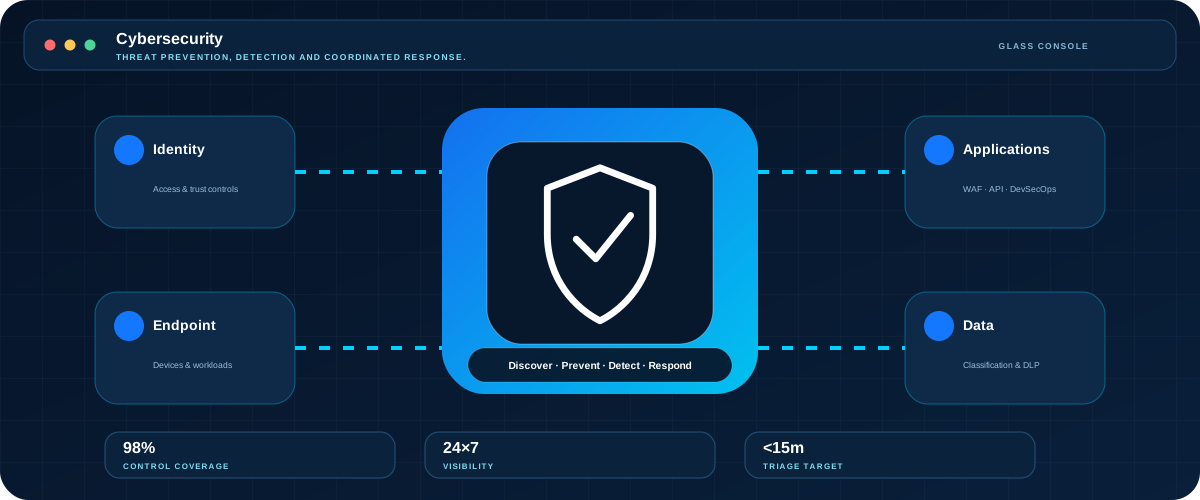
Build resilient defence across identity, data, applications, endpoints, networks, cloud and operational technology—designed for GCC government and regulated enterprise environments.
Services are tailored to your regulatory environment, existing technology, operating model and transformation priorities.
Design target-state security architecture and technology roadmaps aligned to risk, business priorities and regulatory obligations.
Replace implicit trust with continuous verification across users, devices, applications and workloads.
Protect structured and unstructured information through classification, access controls, encryption and monitoring.
Integrate security into application design and delivery from code to API and runtime.
Protect campus, data centre, branch and cloud connectivity with segmentation and threat prevention.
Improve visibility and control for connected devices and critical operational environments.
Continuously identify, prioritise and remediate vulnerabilities and attack paths.
Prepare teams, tools and workflows for rapid containment, recovery and evidence handling.
Every engagement uses defined governance, acceptance criteria and transition steps to reduce delivery risk and support long-term operations.
Requirements, current state, risks and dependencies.
Target architecture, controls, sizing and implementation plan.
Configuration, integration, migration and quality assurance.
Testing, evidence, acceptance and operational readiness.
Monitoring, support, reporting and continuous enhancement.
Technology is connected to measurable improvements in resilience, control, performance and service quality.
Prioritised controls and remediation based on business risk.
Integrated prevention, detection and response across the estate.
Clear ownership, evidence and traceability for security obligations.
Zero Trust, cloud and application security, OT/IoT, data protection, offensive validation and digital trust.
Replace implicit trust with continuous verification across people, devices, workloads and applications.
Protect cloud-native and published applications from design through production.
Improve visibility and control for connected and operational environments.
Protect structured and unstructured information throughout its lifecycle.
Validate exposure and defensive effectiveness through risk-led testing.
Govern digital trust, certificates and cryptographic dependencies.
Selection is confirmed against customer standards, architecture, licensing, procurement, support and interoperability requirements.
Share your scope, current environment and target timeline. Our team will help define the right assessment and delivery path.